Showing posts with label Album Reviews. Show all posts

Thursday, December 17, 2009

Best of the 2000s: Albums

Dear readers of What Is Groove?,

Your faithful committee of one has tortured his brain and eardrums in creating a list meant to reflect his view on the 20 best albums and songs of the last ten years. Examining the artists that appeared numerous times, it became clear that the foremost artists this decade were OutKast and Radiohead. I tried to make these lists as objectively as possible, taking holistic views of artists and the music they created, instead of a self-satisfying exercise in taste. Of course, don't treat the lists as gospel. I hope y
ou enjoy reading about these albums and songs, and who knows, you may discover something you had overlooked in the past. So without further Bob McAdoo...

1. Radiohead,
Kid A (2000)


In the classic rock era, "back to basics" meant embracing acoustic instruments, folk, country, and early rock n' roll influences. Fast-forwarding to 2000, we run into Radiohead, three years after their breakthrough OK Computer and going back to basics themselves. Only this time, deconstruction of rock n' roll is not based on the genre's musical origins, but on ideas of what rock n' roll could be. Verse-chorus-bridge structures are largely ignored, live drums are mainly absent,
the lyrics are mumbled in exhausted hazes, and the soundscapes feel simultaneously distant and immediate, expansive and minute. It's not merely rock n' roll, but a leveling and extreme reduction of its assumptions. Oh, the songs are great too. "Morning Bell" is an overpowering portrait of divorce and loss. "Everything In Its Right Place" and "How To Disappear Completely" are meditations on the price of stardom and the alienation it produces. Even the most "rock" style tunes - from the free brass blowing in "The National Anthem" to the ironically amoral "Optimistic" - are disorienting and jarring. Kid A was Radiohead's first piece of evidence suggesting that the best band in the world may also be its most progressive.

2. OutKast,
Stankonia (2000)


From the
Sly Stone cover, down to the bubbling basslines, syncopated mayhem, big hooks, outrageous humor, and heavy amounts of stankydank consumed in its recording, Stankonia is easily the most creative, important piece of funk since Prince's heyday. Yeah, I said it. Funk though it is, hip-hop is its essence. Where else can you get an in your face dose of cosmic slop with "Gasoline Dreams" and also hear dudes talk about how cool they are ("So Fresh, So Clean")?
"B.O.B." is the most out there tune of the decade, bringing gospel choir, funk and metal guitar, hard electrofunk, and catatonic snares all under the fold. Its title proved to be prophetic as well. (Stank, the Southern pronunciation of "stink" is one of the original definitions of the word "funk.") Stankonia, then, "the place from which all funky things come," is the absolute embodiment of what this record is about. True, there are numerous contradictions in the album, from the ladies first ("Ms. Jackson" and "I'll Call Before I Come") to the ladies last ("Snappin' & Trappin'" and "We Luv Deez Hoez"), and from the anti-materialist ("Red Velvet") to the "Gangsta Shit." The album dares not have a bottom line though, and challenges its listeners to try to find one themselves, all while shaking their asses. Reversing Funkadelic's maxim, OutKast seem to encourage us to free our asses and our minds will follow.

3. D'Angelo, Voodoo (2000)


All hail ye grand smoky groove! D'Angelo's sophomore album is simply the best R&B album of the decade, and quite possibly of the last two. It was part of the neo-soul movement, which aimed to incorporate hip-hop and old school R&B sensibilities. The unhurried pace of the tunes make them often sound like random mid-points in cannabisjams, all while feigning a haphazard approach. The truth is that the tunes are supremely focused. D'Angelo and his cohort seamlessly blend fat hip-hop backbeats with the pulsating grooves of vintage '70s soul and funk while his multitracked vocals fall somewhere between Marvin Gaye, Al Green, and Prince (especially "Untitled [How Does It Feel]"). The thick funk of "Playa, Playa" and "The Line" isn't diminished by the low BPMs. In fact, D'Angelo shows that the slow, tense simmer is just as good in funk as in boudoir soul. As a whole, the album builds on the continuum of classic R&B by adding hip-hop inflections, vocal themes and phrases, and lyrical matter. The misunderstood minimalism of the tracks should not be seen as a fault: Think of it as a way of getting to the roots, to the origins of soul, where they bask in cauldrons amid heavy history, spinning wax, Stevie, minor 9ths, scratched 16ths, hard bass, falsetto grasps, all in all, an attempt to re-imagine modern soul and where D'Angelo sees it needs to go. That's the voodoo.

4. My Morning Jacket, Z (2005)


For about seven years, My Morning Jacket had been toiling as a country roots band. With their fourth studio album, the band embraced its alternative rock potential, leaned on the melodic benefits of a good keyboard player, and let the guitars rip. Such is Z, one of the most dreamlike, trance-inducing alternative rock
albums. Jim James's exquisite voice is put to the test in the first track, "Wordless Chorus." His falsetto wails may not have a literal meaning, but they create a visceral, emotional meaning. When was the last time you heard singing this good in a rock band? A splash of reggae via Hawaii Five-O in "Off The Record" kicks off the tune, before the dub jam sets in. "Lay Low" is an exquisite exercise in the development of tension and release. Once the jam begins, both guitars begin a rolling chase, playing melodies that each hint at or play half of, then disappear or stop. Little by little, the dual guitar solos overlap in jousting melodicism, and when they play the crescendoing melody in harmony, it is utterly devastating. "Dondante," the album closer, is another guitar showcase, desolate and bleak, but ultimately ravishing as well. James and his band manage to reinterpret alternative rock as an extension of classic rock, in which solos are not postmodern blatherings and compositions are equally elusive and expressive.

5. Ghostface Killah, Fishscale (2006)


Non sequiturs are one thing, abstract, bullet-paced logorrhea is something else entirely. Ghostface raps in a way nobody has before by choosing not always to craft meaning but effect. That's why his rhyme schemes, attention to detail, and metaphors transcend an everyday rapper's. Take "Shakey Dog," the first track. It's one long narrative, almost four minutes long, about a drug raid gone wrong, with no hook or chorus, immense amount of narrative details (cab fees, shoe types, food being eaten, dialogue, et al.) and on top of all that, chord changes. The last four bars of every 16 occupy a single chord change that often underlines the action in the story being narrated. And that's just the first track. "The Champ" is a live band rip, with Ghost flying at 200 mph,
with no regard to logical connections ("I'm James Bond in the octagon with two razors.") The best Wu-Tang jam since the 36 Chambers is here with "9 Milli Bros." and J Dilla contributes from the beyond in "Whip You With A Strap," where the sampled tune is his own "One For Ghost." Good thing Dilla was looking out. Unlike the vast majority of other high performance hip-hop records of the decade, Fishscale achieves unity between production and rapping, where each would be unimaginable without the other. Ghostface Killah's vocal performances are unparalleled in hip-hop, and Fishscale represents his high water mark.

6. Kings of Leon, Aha Shake Heartbreak (2005)


The "Southern Strokes" is old, homie, let it go. Also old are the cutesy recounts of the band being descendants of a Pentecostal minister named Leon and being comprised of three brothers (Caleb, Nathan, and Jared) and one first cousin (Matthew), all of them of the surname Followill. This band is the most promising American rock band not named My Morning Jacket. Their boogie swagger and inventiveness is simultaneously a throwback and a progression. They got some Stones circa Exile on Main Street in them, balanced between disorder and focus, but they also move the melodic heart from the guitar to the bass. This funkiest instrument and its player, Jared, hold do
wn the riffs ("Slow Night, So Long") and the center of the tunes, while the guitars swirl and dip in all directions. It serves as both anchor and rudder, an unusual and subversive role. Caleb's vocals are the second most awe-inspiring sound on this album. In the songs where he sings of loose women that confound him ("Soft," "Taper Jean Girl," "Milk," let's just say 90% of the album), he both repels and attracts them with his viciousness and vulnerability. Compound that with his sandpaper-on-jagged-glass voice and you have a singular achievement.

7. Erykah Badu, Mama's Gun (2000)


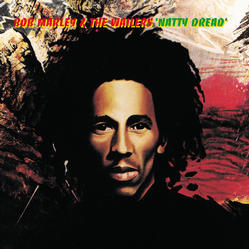
It would be unfair to label Badu's first album of the new millennium as the female neo-soul version of D'Angelo's Voodoo (or vice versa.) It's a bold, deliberate attempt to reconcile analog soul (dig the muted tones in the album cover, plus her Natty Dread glare) with jazz phrasing and hip-hop attitude. Thematically, the album sticks to heartbreak, excluding the barn-burning opener, "Penitentiary Philosophy," which serves as her own sign 'o' the times. Badu bares everything she's got in the album, revealing anguish and emotional wreckage in the closing multipart suite "Green Eyes," about her breakup with Andre 3000 from OutKast. Between these bookends, Badu insinuates herself inside slinky funk grooves ("Booty"), ride a midnight wave ("Didn't Cha Know"), and devotes herself to spiritual ("Kiss Me On My Neck [Hesi]) and social ("A.D. 2000," about the violent death of Amadou Diallo) causes. Neo-soul wasn't really a genre. It was a natural extension of musicians using what's at their disposal. For many soul and R&B artists, hip-hop has been a part of their musical education, so why not use it? This Badu does tremendously, with help from ?uestlove on the drums, J Dilla on production, and Pino Palladino on bass. Most of this crew was known as the Soulquarians, along with others such as James Poyser and Q-Tip, and their very best work were D'Angelo's and Badu's albums from the year 2000.

8. Radiohead, Amnesiac (2001)
9. OutKast, Speakerboxxx/The Love Below (2003)
10. Fiona Apple, Extraordinary Machine (2005)
11. My Morning Jacket, Evil Urges (2008)
12. Radiohead, In Rainbows (2007)
13. Lil Wayne, Tha Carter III (2008)
14. Danger Mouse, The Grey Album (2004)
15. The Mars Volta, Frances the Mute (2005)
16. U2, All That You Can't Leave Behind (2000)
17. The White Stripes, Elephant (2003)
18. Erykah Badu, New Amerykah (4th World War) (2008)
19. MGMT, Oracular Spectacular (2007)
20. Ghostface Killah, Supreme Clientele (2000)

Tuesday, February 17, 2009

Two "new" Pearl Jam records?


Pearl Jam is back in the studio with producer Brendan O'Brien for the first time in 11 years for their ninth studio album. They last collaborated on 1998's Yield. Bassist Jeff Ament says that vocalist Eddie Vedder just "keeps getting better." 2009 looks like it will be a busy year for Pearl Jam. On March 24, their debut album and grunge cornerstone Ten will be rereleased with brand new mastering and mixing, courtesy, of course, of one Mr. O'Brien. Here is a remixed Porch and fan fave B-side Brother.

Photo credit: Spark St. Jude

Saturday, December 13, 2008

Selected Retrospective: Ghostface Killah | Fishscale


"You ain't been hungry since Supreme Clientele," a raspy voice imitating Mickey the trainer from Rocky tells Ghostface Killah. He's right. Ghostface's albums between Supreme and this his fifth album were often uninspired and lacking his fevered need to get on the mic. Fishscale, produced by MF DOOM, Pete Rock, J Dilla, among others, isn't a return to form. It greatly surpasses his previous best effort and firmly establishes him as one of the best rappers alive.

Proof isn't hard to come by. Dig "Shakey Dog," the first track off the album. Lyrically, it's a first-person account of a drug heist gone terribly wrong. The level of detail in the lyrics ("Back seat with my leg all stiff...tartar sauce on S Dot kicks") is worthy of the strongest crime fiction. Rapnoir, anybody? But the tune's structure is what freaks me out. Ghostface raps for 64 straight bars without pausing for a hook or chorus. Given that the standard hip-hop verse is 16 bars long, this is extraordinary. Absurd thoughts crossed my mind listening to the narrative: Does Ghostface breathe? If so, has he learned circular breathing? Is it possible this is a freestyle, no pen-and-pad, rap? Just when those thoughts began to interfere with paying attention to the song, something uncommon happened with the horns and the loping bassline -- tonal modulation. "Wait," you say, "he raps for 64 bars nonstop and the song changes chords too?" Yeah, that's right, homie. 12 bars in the A sections and four bars in the B sections. That's how Ghostface rolls, though the structure is loosened up the first time around. For good reason, it took me quite a while to get to track two. It wouldn't be an exaggeration to say that "Shakey Dog" bests "Nutmeg" and "Run" as far as prime Ghostface Killah jams go.

Fishscale, slang for uncut cocaine, mostly focuses on coke slanging, or "pyrex scholars," as Ghost says. "Kilo" introduces the metric system while Ghost and Raekwon cook coke, "Big Girl" cautions ladies to lay off the nose candy, and "Crack Spot" spotlights the dangers of paranoia. When Ghost's next album drops, I hope he's as hungry as he is here.


NOTE: In "Whip You With A Strap" Ghostface samples a J Dilla song off of Donuts, the last album Dilla cut while alive. The song he sampled is called "One for Ghost." Glad Dilla was keeping an eye out.

Sunday, November 30, 2008

Selected Retrospective: Ghostface Killah | Supreme Clientele


Four years after Ironman and a stint at Riker's Island, Ghostface Killah proclaims on Supreme Clientele that he doesn't mean to harm anybody, but that it happens when he encounters wack MCs. At first glance, this seems like another prideful boast in the hip-hop "I'm-the-best-and-you're-wack" continuum. Yet after digging the whole record, it becomes apparent that far from boasting, Ghostface was stating his mission.

The first five songs are about as unsurpassable as Ghostface gets, culminating with the unforgiving horns n' strings of "Apollo Kids." It's hard to understand how this was only his second record. True, he collaborated with some of his Wu brethren before, but that can't account for Ghostface going form solid to outstanding, can it? On "Nutmeg," Ghostface raps,
Scientific, my hand kissed it
robotic, let's think optimistic
you probably missed it
watch my dolly dick it
scotty watty cop it to me
big microphone hippie
hit Poughkeepsie crispy chicken verbs
throw up a stone richie.
Abstract, to say the least, but hard-hitting and unrelenting in its rhythmic pulse. In "One," the rhyme scheme for more than half of his second verse is based on the sound "ash" and its variations. He moves the accents of the rhyming words from the end to the beginning of lines, and sometimes the rhymes are only internal. Add his bewildering, spontaneous reversal of "supercalifragalisticexpialidocious" in "Buck 50," and it's all too clear that nobody else raps like this or would know how to. Wack MCs beware.


NOTE: The Bootsies for
Supreme Clientele also apply to Ironman.

Sunday, November 9, 2008

Selected Retrospective: Ghostface Killah | Ironman


After superlative solo records by Wu-Tang Clan members Raekwon (Only Built for Cuban Linx...) and Genius/GZA (Liquid Swords), it was Ghostface Killah's turn. His debut Ironman, released in 1996 and also billed to Raekwon and Cappadonna, makes its den in old soul samples and ripe tales of drug deals gone bad ("260," see video above), violent misogyny ("Wildflower"), and well, everyday gangsta shit. Wu-Tang architect RZA produced the whole album and his trademark hard bass drums and crisp snares, rolling basslines, eerie keys, and razor-sharp samples abound (see "Camay" and "Motherless Child" as ideal examples.)

Ghostface Killah here is beginning his assent to MC superiority. At his most unleashed, Ghostface is a free-associative MC, searching for words and phrases that might rhyme but will seldom make logical sense. No matter though. His kinetic, freeform rapping style is only matched by his barely controlled enthusiasm and the level of detail in his rhymes ("Grab the pliers for the channel/fix the hanger on the TV.") His gangster alter ego, Tony Starks (note the alternate spelling to the Iron Man comic book hero) would continue to reappear on future records, often concocting morbid tales of coke-slanging. It would be another four years until his sophomore record Supreme Clientele would be released to widespread acclaim.

Friday, October 24, 2008

Mustache | Le Probleme C'est Toi!


For the men of Mustache, the last great movement in rock n' roll was grunge. They continue that proud tradition with some modifications on their debut EP Le Probleme C'est Toi! ("You Are The Problem!"), crafting an altogether refreshing outlook on angst. Yes, the dual piston pumps of aggression and melodicism are there, but the cynicism is not. What, you ask, is sincere grunge? No, it isn't the antithesis to Seattle's best export. It's riff-crazy rock n' roll with an uncanny ability to nail down buoyant melodies that don't assault or shock the listener's sensibilities. If some of the melodies sail where the lyrics sink, it's a measure of the band's growth and potential.

"Deep in the Ocean" opens the album with a bit of feedback that bursts into two separate riffs, one hard as bricks, the other a spiral. Lead guitarist Rub
én Aybar plays multiple roles in the tune, from joint riffing with bassman Robert Fernández and rhythm guitarist and vocalist Jonathan Schmidt to a slide lead in the fabulous chorus. The various guitar layers are balanced by Rubén's brother, Carlos, on the drum kit, crashing cymbals with chord changes and changing textures with his brother’s licks. If only the lyrics matched the musical makeup. The chorus lyrics (“Deep in the ocean/no one can save you/it’s up to you/to survive”) resemble a survival show voiceover in the Discovery Channel. Schmidt’s vocal histrionics at the song’s end mimic Chris Cornell. And like Matthew Bellamy of Muse channeling Thom Yorke, it’s not a good thing.

The most successful songs of the bunch are and “Connect” and the album-closer, “So Bright.” “Connect” is a lilting ballad that partially suffers from the awkward song title-as-chorus. With hints of Incubus and early Live, the song leaves a lasting impact through Rubén’s stuttering lead and Fernández's spacious playing. Similarly, “So Bright” benefits from being at a slow tempo, which gives the band room to move and breathe, unlike the breakneck, riff-fests of the previous tunes. Schmidt’s voice sounds like his own on this song, too, a deep tenor with restrained emotion. Rubén and Carlos trade syncopated accents in the song’s middle breakdown, before the guitarist lets it fly and creates a synesthetic moment with his trusty slide.

Le Problem C’est Toi! has two phases: pre-“So Bright” and “So Bright.” The song represents the band’s ability to loosen the grip on their influences and take bold, independent steps forward without the use of a rearview mirror. Their next album should thoroughly explore that territory. For now though, with their strong debut EP, Mustache has established themselves as rock n’ roll disciples on a mission to restore order to a genre gone emo on our asses.

Sunday, October 12, 2008

Porter Batiste Stoltz, featuring Page McConnell | Moodoo


Mix some New Orleans voodoo funk with a dash of Page McConnell, what do you get? A little something called Moodoo. Porter Batiste Stoltz are a trio extracted from the current Funky Meters, a post breakup amalgam of the remaining original Meters, the meatiest and grittiest of the heavyweight funk crews. Original bassist George Porter Jr. is joined by post-reunion members Russell Batiste on drums and Brian Stoltz on guitar while keyboardist Art Neville is absent. According to some reports, since this concert was held in Vermont, Page McConnell, the keyboardist from Phish, was attending this show anyway. The guys from PBS invited him onstage, and they jammed together for almost two sets, the highlights of which are included in this disc.

The Meters are the most important New Orleans funk outfit, and their particular style has inspired countless bands and genres. If you thought their sound was spare even with Neville on organ, dig how they sound with no keys on three of the album's nine tracks. In "Comin' At Ya," Porter and Stoltz harmonize on riffs and licks, but when Stoltz pulls away to solo Porter takes off in an opposite direction, hitting the chord changes while also creating new grooves and rhythms. Batiste holds down the fort while his band members take flight. As they say during some stage banter, Batiste is the "guardian of the groove." Amen to that.

After their touchstone cover of Curtis Mayfield's "Check Out Your Mind," the band rips into a medley that incorporates an original Meters track and two covers, one by Sly & the Family Stone and the other by Bob Dylan. In Stoltz's live album Up All Night, the medley begins with "Funky Miracle" and segues into "Rainy Day Women #12 & 35." In this concert, they squeeze Sly's "Sing a Simple Song" in the middle. Though the first segue is seamless, the final one is a little awkward. When Stoltz begins to play the song's chords, McConnell drops out. You can hear him realize what song it is about 20 seconds later when he begins playing the song's piano part.

McConnell joins the band in "I Get High," a funkafied strut that begins with the immortal lyrics, "When I'm walking down the street/I love to walk behind you/it's so wonderful to see/that the Lord has been so kind to you." When Batiste is on the ride, McConnell steps up as Stoltz plays some descending chords and Porter fills the middle. Unexpectedly, Porter and McConnell drop out in the first part of Stoltz's solo. With no bass or keys, there is no bottom to the track, which gives the sensation that the band is precariously floating. Ah, but when the whole band jams as an ensemble.  Each member is riffing off the main melody, even Batiste who relies on the melody for his accents; so though the group may sound disjointed and skeletal, they are spectacularly tight and economical. Porter, the underrated bass king, knows exactly where to be at every single instant. Sometimes he's harmonizing with Stoltz, other times he's locked in tight with Batiste, and others he's on his own. Imagine many tetherballs attached to one pole, each tetherball is either McConnell, Stoltz, or Porter, and the pole is Batiste.

Friday, October 3, 2008

Metallica | Death Magnetic


It's fitting that a heartbeat opens Metallica's Death Magnetic, their first album in five years. It might not be a rebirth, but it's certainly a resurrection. Though their previous album St. Anger attempted a return to their thrash roots, there were many omissions and questionable decisions: insulting to most metalheads, there were no guitar solos; the snare drum sounded like a beat up tin can; the background vocals were unnecessary and often intrusive; and the alt-rock melodies didn't jive with anything. Well, you can forget that mess. Bring on Kirk Hammett's molten light solos, bring on the double bass drum hits, the rapid fire triplets, the abundance of rhythmic switches and time signature changes. After all, this is Metallica in their natural state.

There are ten tracks on the album, but the truth is you can multiply that by three or four, and in some cases six. Most songs are multipart behemoths that continuously pile new riffs, licks, and rhythms on top of each other, until those give way to completely new sections. The previous steps are repeated with new grooves, and then Hammett is unleashed. If there's any revelation in these tunes it's the lead guitarist. In "The End Of The Line," after the second or third groove change, there's a short feedback buzz and out of nowhere, a rumbling, lightning-fast mound of notes tumbles in a frenetic wah-wah haze. A groove change later, the band returns to the main riff, which sounds like a variation on Pearl Jam's "Animal," as guitarist and lead vocalist James Hetfield growls the song's title.

A catalogue of metal riffs is included in "All Nightmare Long." If there's any metal band out there running out of ideas, it might be a good call to jack one of these. Somewhere in these heavy as lead textures I'm sure is bassist Rob Trujillo. The fact that he's basically inaudible throughout the record isn't his fault. With all the tussling between both guitars and Lars Ulrich's drumming the listener is basically asphyxiated, never mind having space for bass. Unlike most bands, the lack of a bass presence doesn't diminish the band's fascination with rhythmic invention.

The song whose sole focus is rhythm and texture is "Suicide & Redemption," Metallica's first classic instrumental in years. There are so many meaty riffs that at times the song sounds like a tape cut at a rehearsal. Ten minutes of this is hardly enough. It's invigorating to hear a band tear into every note and beat they play. At last Metallica has looked at itself in the mirror and accepted its reflection: the greatest metal band of the last 25 years.


NOTE: In a sharp contrast to their Napster days, the band has posted the entire, unedited album on their website for free streaming. Click here to get pummeled.

Thursday, October 2, 2008

Grateful Dead | Rocking The Cradle: Egypt 1978


Not even the best packaging these eyes have ever seen can save this record. A fold out of a desert scene gives way to a moon-bathed pyramid adorned with the Grateful Dead's Egypt logo. Across the sand version of steal your face is the Sphinx and behind it the eclipsed moon. This dazzling package holds a 2CD/1DVD compilation of the Dead's only shows in Egypt. The band played at the Giza Sound & Light Theater, a majestic open-air venue within meters of the Sphinx and the Great Pyramids. Yes, these gigs are legendary, though often not for the music, but for the spectacle.

When the band realized that the tapes for the first two nights were largely unusable, they went all in for the third and last show, on September 16.  For that reason, most of this comp, excluding "Jack Straw" and "Stagger Lee," came from the last night. The problem is that the tunes are out of order, so the natural flow of this brilliant Dead show is absent. The second disc tries to recreate the last night's second set, and it mostly succeeds. All the necessary highlights are there: a seamless "Ollin Arageed" (with Hamza El Din, Nubian singer and oud/tar player) into "Fire on the Mountain;"a monster "Shakedown Street;" and an acid country "Truckin'." Inexplicably, two second set songs were included in the first disc and two others, including the encore, were omitted. Perhaps a better alternative to mangling this concert would have been to release a complete performance from the last night. Thankfully, we have archive.org to satiate that need.

Spanning thirteen songs and almost 100 minutes, the most essential component of this comp is the DVD. For the first time we're able to see drummer Bill Kreutzmann playing with one arm, since he had broken his left hand before the concerts. Jerry Garcia looks positively enchanted. He's clearly enjoying himself, molding a heartfelt and lyrical solo in "Candyman" and surrendering to the polyrhythmic freedom of "Ollin Arageed." Watching the greatest band in the land perform during their career peak is an absolute joy. It is precisely this, and only this, that makes this set essential. If you want to enjoy a soundboard recording of the entire, unedited final show at Egypt, click this link.

Sunday, September 28, 2008

Kings of Leon | Only By The Night


Forget worshipping at the altar of U2, Kings of Leon are straight up zealots on their fourth record, Only By The Night. If lead guitarist Matthew Followill would stomp any more on The Edge's signature delay pedal, they'd be jamming yesterday. Not that this family affair - Matthew the cousin, Caleb, Jared, and Nathan brothers - merely marauds.

A submarine sonar lead guitar opens the first track, "Closer." There is an ominous, haunted feel to the track that is magnified by Nathan's drumming. The song's rhythm isn't pegged as a backbeat or a downbeat; in fact, it is both. In the first bar of drums the beat is one-two-three-four; and in the second bar the beat is on the three, one-two-three-four. This two-bar pattern is repeated throughout the tune. This created a rhythmic imbalance that, instead of interrupting the rhythm, paradoxically adds to the lyrics's vampire anguish: "Driven by the strangle of vein/showing no mercy I'd do it again."

The album shifts from strength to strength in the first half. "Sex On Fire," the albums first single, is the best song on the record, and possibly the best song Kings of Leon have written thus far. As the bass and drum alchemy changes throughout the verses, expanding from chopped rhythms to fluid eighth notes and hi-hat hits, the chorus's topography becomes clearer. Caleb wails, "Your sex is on fire" as Matthew tears a melody from The Edge School of Poignant Guitar Dynamics.

Sandwiched between the doubtful wedding bells of "17" and the soul's dark night of "Cold Desert" are the weakest tracks on the record. Neither "Notion," "I Want You," or "Be Somebody" deliver the emotional impact that the rest of the album so earnestly does. The band's promise, though consistently improving record by record, has yet to be fulfilled. Stay tuned.

Sunday, July 13, 2008

My Morning Jacket | Evil Urges


After releasing 2005's Z, My Morning Jacket entered the mainstream spotlight, ready to inherit the mantle of alternative rock's next big thing. But a funny thing happened. The jam-band scene embraced their supreme live shows - though the group rarely jams - and now they are farther away from the mainstream and closer to being festival gods. Faced with this cognitive dissonance on their latest record Evil Urges, the band simply chooses not to pick a style and justify it. Rather they relish in the contradiction, creating subtle alt-country tunes and space rock excursions.

And they also pause for funk. "Highly Suspicious," easily the most adventurous and hilarious track on the album, is a mix between Southern rock, Prince, and metal-Devo. Jim James sings in a peerless falsetto as drummer Patrick Hallahan does his best Bambaataa beat. A dark, paranoid chant and a guitar solo that would make Skynyrd proud elevate the chorus to postmodern heights. Where this tune incorporates a pastiche of modern pop music, various tracks are sober, country-inspired ditties.

"Thank You Too!," "Sec Walkin'," and "Look At You" are tunes where James's pastoral musings on love and identity are given room to breathe with the earthy arrangements. Carl Broemel's work on the lap steel augments the country atmosphere on the songs and James's exquisite melodies bring the pathos. The closing suite - "Smokin' From Shootin'" and "Touch Me I'm Going To Scream Pt. 2" - package the country and electro tendencies in a sprawling, freewheelin' epic.

"Smokin'" begins gently and slowly intensifies to a soaring bass and guitar harmony. The rumbling drums and lap steel push and pull at each other while the harmony and vocals barely hover above them. "Touch Me Pt. 2," on the other hand, is a space dance number inspired more by Pink Floyd than Daft Punk. Disco drums and short chromatic bass fills propel the rhythm as the keys play the main melody. In the denouement, James's high pitch melodious screams mirror the chord changes in the chorus. And the chorus mirrors how you should feel while listening to this record: "Oh, this feeling it is wonderful/don't you ever turn it off!"
(Photo credit: Laurie Scavo)

Sunday, March 30, 2008

Gnarls Barkley | The Odd Couple


There are no two ways around it: Gnarls Barkley would be Two-Face/Harvey Dent’s favorite band. There are transfixing (and ludicrous) non sequiturs, often counterpointed with bright arrangements and lyrical despair. Unlike their debut, Gnarls Barkley’s second album The Odd Couple lives solely in the deep end of the ocean. There is a desolate gloom cast above all the songs. The pall is so great that even the jovial moments are disturbing – an undertaker singing “Whistle While You Work.”

The album opens with “Charity Case,” Danger Mouse layering instrument over instrument, only to let them drop at the beginning of the first verse. Though Cee-Lo’s voice is present almost everywhere on the track, including the background vocals, he feels almost absent. It’s in the tone of his vocals, dark and lost, exhausted, gasping for life. Rather than drain the album of energy, this adopted aura powers songs to become portraits of anguish. Or as Bukowski would say, grooves of ordinary madness.

“Run (I’m a Natural Disaster)” (video above, with Justin Timberlake as a VJ) doesn’t stray far from the distress in other tunes, but bumps the BPMs close to defibrillator levels. In fact, British health officials conducted the epilepsy test on the video and it failed. It has since been edited. (Warning: it’s still funky.) But what are we running from? Cee-Lo says there’s “a beast at bay,” but is the beast him? The ascending chords accost and the rapid hi-hat programming resembles a chase without resolve.

Unanswered questions characterize most of the songs. The cheery psychedelia in “Blind Mary” only serves to underscore how twisted the story is while “Neighbors” confronts identity crisis with Cee-Lo’s wails. Both tunes are stories only halfway told. The lack of resolution only confirms the instability of the narrators, but never of the music. No, there isn’t another “Crazy” hit, but who cares? This is pop music of the highest order, paranoia included.

Monday, March 10, 2008

Erykah Badu | New Amerykah, Pt.1: 4th World War


Erykah Badu’s 2008 album New Amerykah, Pt.1: 4th World War is Sly & the Family Stone’s There’s a Riot Goin’ On on bad weed. Like that predecessor, this album aims to take a snapshot of the times, frankly depicting inner city struggles, drug habits, fights for freedom, and personal observations, while striving to be uplifting. Where Riot answered Marvin Gaye’s question by being lugubriously accessible and musically based on funky psychedelia, this one is dense, bleak, and all about hip-hop. Producers 9th Wonder (of Little Brother fame), Sa-Ra, and Madlib figure large in the sound of this record.

Multitracked vocals and dusky, paranoid beats populate many of the tunes. “The Healer” and “My People” showcase bombass Madlib beats, laidback concoctions chock full of blips, Eastern strings, and echoed keys. In these tunes, Badu sings of the power of hip-hop to heal and delivers the message to “Hold on, my people.”

The message in the music continues on “Master Teacher,” produced by Shafiq Husayn of Sa-Ra. The bass and drums pulse like a living, breathing organism. Most of the song features lead vocals interacting with the background vocals in call and responses. A recurring motif in the song is “I stay woke,” which, given the context of the rest of the lyrics, suggests a person’s ability not to be taken advantage of while in search of “a beautiful world.” Over Curtis Mayfield-inspired strings, Badu asks, “What if there was no niggas only master teachers now?” The coda of the tune is a soul-jazz groove that rides the cymbals and electric keys. When Badu shifts the accents in her phrasing, the rhythmic evenness is chopped and reconfigured.

Though the album ends with “Telephone,” a haunting requiem for friend, collaborator, and influential producer J Dilla, its 9th Wonder-produced hidden track, “Honey,” almost operates as a saboteur. Why would Badu make “Honey” the first single? Sure, it’s an infectious, bubbly ditty that says nothing (“Honey you so sweet/sugar got a long way to catch you”) compared to the dark, introverted jams that say a lot. But hey, maybe that’s exactly why.
(Photo credit: Marc Baptiste)

Friday, February 15, 2008

Bill Evans | Conversations with Myself


Bill Evans’s Conversations with Myself defies an unspoken Jazz Commandment: Thou Shalt Not Overdub. Evans overdubbed three pianos, one in the left channel, another in the right, and the last sharing both channels. The result is exhilarating; a master musician solely collaborating with himself, crafting moving, often brilliant, performances.

Like most post-bop pianists, Evans was influenced by Thelonius Monk, who created memorable melodies while articulating notes and chords in offbeat blocks. Evans covers two Monk tunes on this set, “‘Round Midnight” and “Blue Monk.” (A third, “Bemsha Swing,” is included as a bonus cut in the album’s reissue.) The melody in “‘Round Midnight” is carried by the left and center pianos, while the right piano hits the chord changes and comps. In the latter part of the tune, the “conversation” the album title refers to becomes clear. The melody is started by the piano in the left channel and completed in the right, and then the pattern is reversed. Knowing that Evans planned and played one piano part at a time sheds significant light on his ability to rearrange and improvise. Hearing this on headphones is nothing short of awing.

Where the Monk tunes display a robust Evans, the greatest song in the album, “Love Theme From 'Spartacus,'” shows Evans at his most fragile. The song begins with sweeping cascades of notes, flowing from the middle piano to the right. The frail three-note melody is played in the right, though throughout the rest of the tune the melody is shared among all three and, as in “‘Round Midnight,” is also started by one and completed by another. Similar cascades of notes end the song, though unlike the beginning where the notes moved from the middle to the right, the notes move from right to left, in effect encircling the listener. The left piano plays the three-note melody in rapid succession across high registers before the tune ends in a sigh.

“NYC’s No Lark” is darker and more aggressive than the pensive “Spartacus.” The song is a lament for and an anagram of one of Evans’s close friends, fellow pianist and heroin addict Sonny Clark. (Evans used anagrams often. His “Re: Person I Knew” is an anagram of Portrait in Jazz and Explorations producer Orrin Keepnews.) The right piano’s dirge chord phrasing is a sturdy bottom for the left’s dissonant, offbeat notes. When the middle piano rises from silence to utter pathos, it clashes with the left piano as the right follows the chord progression.

To experience this album is sometimes overwhelming. After all, one Bill Evans was often heartbreaking, but now there are three. Where Evans’s natural extension of himself was the piano-bass-drums trio, here he individually embodies the trio with three pianos. Though the songs on this album aren’t the first or the last jazz tunes to use overdubbing, they are Evans’s extraordinary feats of emotion, planning, execution, and performance.

Sunday, January 20, 2008

Radiohead | In Rainbows


It’s hard being the greatest band in the land. Haters of rock journalism enjoy indicating the critics’ penchant to pour praise on Radiohead for anything they do. But if anybody salivates at the idea of a new Radiohead record more than the critics, it’s the fans. But are the universal excitement, hype, and praise deserved? Are they really that good? Well, yes.

In a move that sent all major record companies to primal scream therapy, Radiohead originally released their seventh studio album
In Rainbows on a pay-what-you-will basis on their website. The reason why Radiohead can get away with something like this is because of the unanimous critical and fan fervor. Plus, the record doesn’t suck. For a band obsessed with dehumanized tech sounds that symbolize in ambience and mood the usurpation of the soul by HAL 9000, they made In Rainbows remarkably warm. Its warmth is typical of R&B: melodic rhythmic constructions, lyrical meditations on love, and all possible configurations of groove.

“All I Need” rides a simple bass and drum pattern that if sped up could be a Kanye West sample. For all of Thom Yorke’s directness (“I am an animal trapped in your hot car”), the yearning chorus ends with unease: “You are all I need/Lying in the reeds.” When drummer Phil Selway moves to the crash cymbal, the drifting keys and guitars boil the glockenspiel to harmonize with the bassline, and Yorke sings “S’all wrong/s’alright” interchangeably. The tension the band created for the duration of the song exploded in an escalation to despair.

Where other tunes, such as “House of Cards” (“I don’t want to be your friend/I just want to be your lover” take that,
Prince!) also have R&B leanings, lyrically, the album delves into postmillenium dread – something Radiohead know a lot about. Most of this sentiment is communicated through Yorke’s repetition of short phrases or words, such as “Off again, on again,” “I seen it coming,” “I’m a lie,” “Denial,” and many others. Yorke also does this in previous albums, notably Hail to the Thief. It reminds me of John Coltrane practicing scales over and over, searching for new meaning in the same sounds.

The album ends dourly with “Videotape,” whose narrator is content with dying as long as his YouTube suicide note is captured for posterity. Just like Radiohead to be downers. Just like Radiohead to be the best.
(Photo credit: Lee Jenkins)

Friday, January 18, 2008

Spin Magazine | Meshell Ndegeocello - The World Has Made Me the Man of My Dreams


For the December 2007 issue of Spin Magazine, I wrote a review of Meshell Ndegeocello’s seventh studio album, “The World Has Made Me the Man of My Dreams.” The review appeared online in January 2008.
(Photo credit: Michel Vonlanthen)

Tuesday, January 15, 2008

Bill Evans | The Complete Village Vanguard Recordings, 1961


I was in high school, borrowed Kind of Blue from Carlos, sat on the bed, put some ear goggles on, and gave it a spin. I recall tears peeking out the corners of my eyes and a Gordian Knot in my gut during “Blue in Green.” It wasn’t Miles’s muted horn or Trane’s melodicism that got me. It was the piano and Bill Evans. “Blue in Green,” an Evans number, is a ten-bar, circularly structured tune, ripe with emotional devastation. But it wasn’t the notes. After all, everybody has access to the same notes. It’s what’s behind them, the unquantifiable quality that colors the music, that makes a note or chord we’ve heard hundreds of times sound as if no one in the history of music has ever played it before. That’s the power of Bill Evans. Once harnessed and armed with bassist Scott LaFaro and drummer Paul Motian, Evans was ready to take on jazz history and conventional jazz theory.

The idea was simultaneous improvisation. LaFaro was not going to walk while Evans soloed and Motian rode the cymbals. He was going to craft answers in response to ideas in Evans playing, in effect creating a variegated, dynamic improvisation with no one just blowing.

The trio’s apex was
captured in one day, June 25, 1961, during five sets at the Village Vanguard. Many of these tunes were in Sunday at the Village Vanguard and Waltz for Debby, two of the most beloved live jazz records. This three CD box set collects all of the tunes performed that day and organizes them by sets. In the evening’s first set “Gloria’s Step,” Evans and LaFaro’s playing is so inextricable it’s as if both beings shared a brain but had two separate bodies. As far as swinging goes, the tired cliché “Bill Evans only plays ballads, he can’t swing” is absolutely discredited. For proof, check out “Milestones” in the evening’s second set. His melodic lines and phrases are layered with LaFaro’s interpretations of the same chords in swift moments of harmony. Ten days after the trio’s luminous day the Vanguard, LaFaro died in a car accident, leaving behind a legacy that had yet to be fulfilled. Though distraught by his friend’s death, Evans career moved forward, often working in piano trios, searching for the spirit of ’61Vanguard date until his untimely death to drugs and a failing body in 1980.
(Photo credit: Henry Kahanek)

Thursday, December 20, 2007

Superbad Soundtrack


Perhaps the title isn’t meant to be merely ironic. How could a couple of awkward, inexperienced high-schoolers be Superbad? Lyle Workman’s wholly anachronistic funk soundtrack injects much-needed coolness to the clumsy travails of the young men played by Michael Cera and Jonah Hill in the film that opened in August. But it’s the performances of James Brown’s greatest rhythm section and the juxtaposition of music to film that separates this soundtrack from non-essential counterparts.

On the soundtrack, rhythm guitarist Catfish Collins and his brother Bootsy, the funk architect and co-writer of “Sex Machine,” are joined by Clyde Stubblefield and Jab’o Starks. The Superbad sessions marked the first time these musicians were reunited since 1970. Keyboard virtuoso and ex-Parliament/Funkadelic Bernie Worrell joins the old gang for this album.

Of the 18 tracks on the album, 11 are original compositions performed by the Bootsy-led ensemble; the rest of the tracks are old funk and R&B nuggets. “SuperWhat?,” prominently featuring Bootsy’s wah-wah bass and Shaggy from Scooby-Doo singing style, stands out because it alludes to the characters’ attempts at losing their virginity. The horns in the verse point at mid-´70s Stevie Wonder, and the bridge’s hard, propulsive funk-rock suggests the sound that characterized Funkadelic’s best albums, notably Standing On The Verge Of Getting It On. It’s no coincidence that the musicians freely quote that album since the characters in Superbad are perpetually stuck in the libidinous limbo the album title refers to. “Evan’s Basement Jam,” the oddest original piece, is a striking mélange of sharp, distorted guitar with a jazzy Medeski, Martin & Wood-style clavinet.

Like the main characters in the film, most of the vintage songs in the soundtrack are unapologetically horny. Jean Knight demands to be sexually satisfied in “Do Me” (which is heavily indebted to her previous and biggest hit, “Mr. Big Stuff”), and in “Bustin’ Out (On Funk)” Rick James makes the case that it is better to be stoned while having sex. Unlike the film’s characters’ though, these songs don’t fantasize or merely talk about sex; they are direct statements of desire.

It isn’t the film’s characters that are superbad; it’s the musicians. After all, Jab’o, Catfish, and Bootsy performed on James Brown’s 1970 hit “Super Bad, Pts. 1&2,” proclaiming that to be a sex machine one not need be super bad. If only the characters knew that before pouring liquor in a detergent container.

(Photo credits: Columbia Pictures and Robert Knight)